The most reliable method for how to find leads on LinkedIn is to monitor intent signals like new executive hires and recent company funding rather than sending generic cold messages. Buyers rarely respond to unsolicited pitches, but they are highly receptive when they have a fresh mandate to solve a specific problem. Tracking these triggers allows you to reach out at the exact moment a prospect has the budget and motivation to buy.
Key takeaway: The highest converting LinkedIn outreach relies on timing rather than volume. By tracking specific intent signals like job changes or company milestones, you can replace hundreds of cold messages with a handful of highly relevant conversations exactly when buyers have fresh budgets.
What are LinkedIn intent signals?
Intent signals are observable events or behaviors that indicate a company or individual might be actively looking to purchase software. Paying attention to these signals helps solo founders prioritize prospects who are most likely to convert in the near term.
Intent signals serve as data points showing a change in a prospect's routine or business environment. They indicate a shift from passive satisfaction to active problem solving.
Most solo founders waste time trying to convince satisfied companies to switch tools based purely on feature comparisons. A more effective approach is focusing entirely on companies experiencing a transition. Change creates friction. Friction creates a willingness to buy. When a company experiences a major shift, their existing processes often break down. This creates a natural opening for a new software solution.
READ: Why Executives Buy When They’re in Their First 90 Days of a Big Role
You can manually look for these triggers by monitoring your target accounts daily. Create a dedicated list of ideal companies and check their company pages for updates. Look for press releases, new product launches, or leadership changes. While time intensive, doing this manually for your top fifty accounts will teach you exactly what a buying trigger looks like in your specific industry.
How to find leads on LinkedIn by tracking job changes
To find leads on LinkedIn who are ready to buy, filter your search for your target buyer persona and narrow the results to those who changed jobs in the last 90 days. New leaders want to make an immediate impact and typically have a mandate to update existing tools.
A new Vice President of Sales or Head of Engineering will often audit their department's software stack during their first three months. They are significantly more open to evaluating new solutions than someone who has been in the role for three years. An established leader has already defended their current budget and processes. A new leader needs to prove they are improving efficiency.
Use the platform's search filters to find people matching your ideal customer profile. Look for posts announcing a new role. When you reach out, congratulate them on the move. Ask if they are evaluating their current setup as part of their onboarding. Keep the focus entirely on their transition rather than your feature list. Suggest a quick chat about the common bottlenecks you see other new leaders facing in their specific role.
Tracking job changes manually works well for building early traction. However, it can become difficult to maintain consistency once you need to reach out to dozens of prospects every week while actively coding your product. You will eventually need a more scalable approach.
Spotting recent funding alerts and company growth
Monitoring recent funding alerts helps you identify companies that just received an influx of cash and are preparing to scale. This usually means they are actively looking to adopt new software to support their expanded operations.
When a company announces a Seed or Series A round, they usually have specific goals tied to that money. If you sell a hiring tool, a funding announcement is a direct signal they will start recruiting. If you sell infrastructure software, they will likely need to upgrade their servers to handle more traffic. The actual purchase decisions often happen a few weeks after the press release goes live, making it crucial to time your outreach properly.
Follow venture capital firms and startup accelerators on the platform to spot these announcements early. Set up alerts for target companies. When a funding announcement happens, review their open job listings to understand their current bottlenecks. Frame your outreach around how your software can help them hit the specific growth targets mentioned in their press release.
| Intent Signal | Buyer Urgency | Primary Outreach Angle |
|---|---|---|
| Recent Job Change | High | Auditing existing tools |
| Funding Announcement | Medium | Scaling operations |
| High Post Engagement | Low | Exploring new concepts |
Identifying software evaluation through social selling
Engaging with prospects who actively discuss industry problems is a core component of social selling. Commenting on and participating in these discussions helps you identify buyers who are frustrated with their current tools before they formally start evaluating alternatives.
Social selling is the process of researching and engaging with prospects on social media platforms to build relationships without asking for an immediate sale. It focuses on providing value and timing outreach around specific buyer needs.
Buyers often ask for advice in industry groups or comment on posts about specific technical challenges. A founder complaining about server costs or a sales manager asking for email template advice is displaying a clear intent signal. They are actively seeking a solution to a problem your software might solve.
Spend twenty minutes a day searching for industry specific keywords in posts rather than just looking at profiles. Leave thoughtful comments that add value to the discussion without pitching your product. Follow up with a direct message expanding on the topic. This transitions the interaction from a cold pitch to a warm conversation based on mutual interests.
Decision framework: Which intent signals matter most?
Your ideal approach to b2b saas linkedin outreach depends on the maturity of your target customer and the price of your product.
If you are selling an affordable productivity tool to individual contributors, track engagement signals. Monitor people asking questions in relevant groups or commenting on industry posts. Reach out with a helpful resource or template.
If you are selling an enterprise solution to department heads, track job changes. Focus on newly hired directors or vice presidents who need to prove their value within the first few quarters of their tenure.
If you are selling infrastructure or scaling tools to startups, track recent funding alerts. Target founders or operations leads who just secured capital and need to build out their technical foundation rapidly.
Due to intent signals, our LinkedIn outbound response rate has risen up by 40% with a weekly average of 5+ demos.
Automating B2B SaaS LinkedIn outreach
Automating your outreach process allows you to scale your discovery efforts without spending hours manually checking profiles for intent signals. The goal is to let software handle the repetitive research phase so you only step in when a prospect is ready for a conversation.
The biggest bottleneck for linkedin prospecting for solo founders is context switching. Jumping between writing code, answering support tickets, and scrolling through feeds often leads to inconsistent marketing efforts. Building an automated system ensures your pipeline grows even when you are focused on product development.
Many solo founders start by building complex spreadsheets to track these signals. While effective initially, maintaining this administrative work takes valuable time away from building the actual product. Some founders eventually use AI marketing crews like Runlo to manage this discovery phase in the background.
Set up automated lead scoring based on the intent signals that matter most to your business. Assign points for recent job changes, company funding, or relevant post engagement.
Automated lead scoring is a methodology that assigns point values to prospects based on their behavior and firmographic data to determine their sales readiness. It helps prioritize outreach to individuals who show the highest probability of buying.
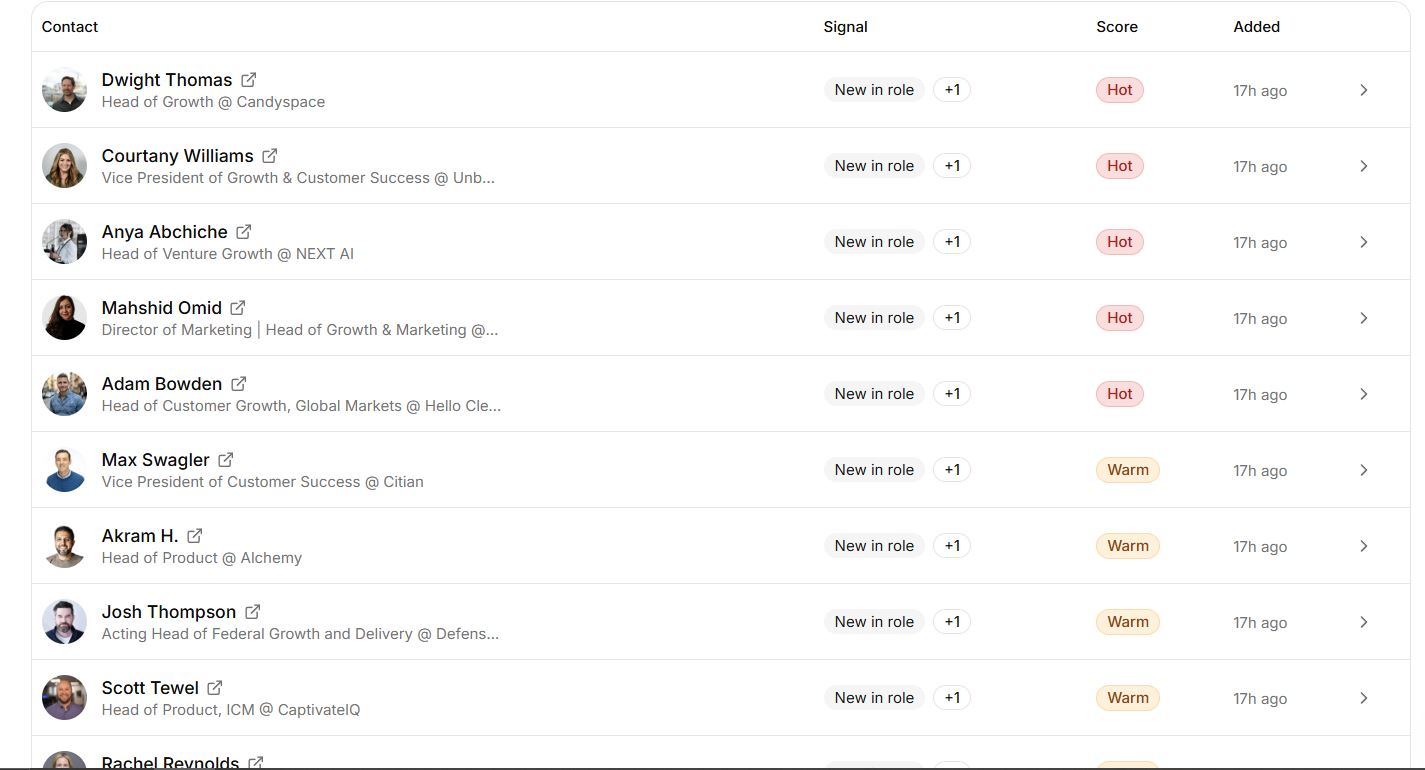
Only reach out to prospects who cross a specific point threshold. This keeps your pipeline focused on high probability targets. You can establish tracking using specialized tools. Runlo includes an agent named Eva specifically designed for this workflow. Eva monitors over 10 intent signals like recent funding and new executive roles, finding and scoring leads automatically so you can focus entirely on having conversations with the most qualified prospects.
Crafting messages based on automated lead scoring
Crafting outreach messages based on automated lead scoring requires mapping your product benefits directly to the specific intent signal that triggered the score. A highly scored lead expects a relevant message rather than a generic feature pitch.
Prospects can easily spot automated templates. When someone receives a message referencing a recent milestone, they evaluate whether the sender genuinely understands the implication of that milestone or just scraped the data. Specificity is an excellent way to prove you understand their context.
Create a messaging matrix for your top three intent signals. If the signal is a new hire, reference the common challenge of auditing legacy systems. If the signal is new funding, reference the challenge of maintaining quality while scaling rapidly. Write the first two sentences uniquely for each prospect, then use a proven template for the actual question. Keep the total message under four sentences.
Frequently Asked Questions
How many intent signals should I track at once?
You should focus on tracking two or three high value intent signals when starting out. Monitoring too many variables can overwhelm your process and make it difficult to craft specific outreach messages. Start with recent job changes and company funding announcements to build a solid foundation.
Do I need a premium account for LinkedIn prospecting?
You do not need a premium account to start finding intent signals manually. The standard search features allow you to filter by industry and track company updates. However, premium tools offer advanced filtering options that make it much easier to scale your automated lead scoring efforts later.
What is the best way to contact a new executive?
The most effective approach is to send a brief message congratulating them on the new role before mentioning your product. Acknowledge that they are likely evaluating their current processes. Ask a specific question about their priorities for the quarter rather than immediately asking for a meeting.
How quickly should I reach out after a funding announcement?
You should wait roughly one to two weeks after a funding announcement before reaching out. Executives are usually overwhelmed with messages immediately following the news. Waiting gives them time to settle into their growth planning phase, making them much more receptive to evaluating new software solutions.
Can automated tools completely replace manual networking?
Automated tools are excellent for discovering and scoring leads, but they cannot replace genuine human interaction. Software should handle the repetitive task of finding intent signals. You must still personalize the final conversation and build actual relationships to close deals successfully in B2B software sales.
Conclusion
Finding leads successfully requires paying attention to the signals buyers leave behind when they are preparing to make a change. Focusing your energy on prospects experiencing transitions will yield significantly better results than broad outreach campaigns. If you want to streamline this discovery process while you focus on building your software, try using Runlo to monitor these intent signals automatically.
